
Is the Farizon V7E Right for Your Brisbane Business?
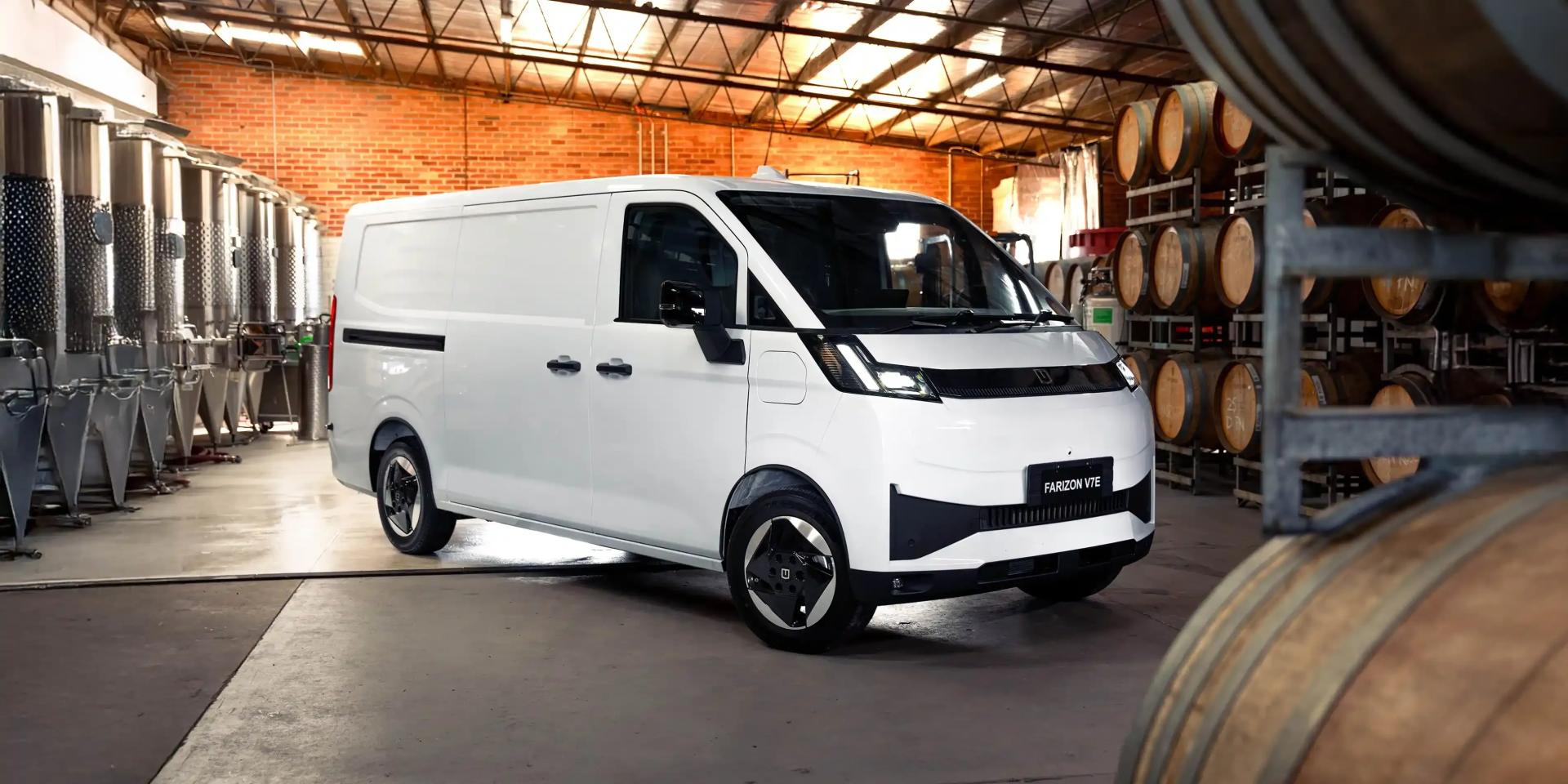
Buyer Guides & Vehicle Safety | Farizon V7E
Buying a work van is usually a business decision, not a lifestyle one. You need the payload to cover your load, the range to finish the run, the reliability to stay on the road, and the total cost of ownership to make the numbers work. This guide works through all four in the context of the Farizon V7E, specifically for businesses operating in Brisbane and greater South East Queensland.
Barton's Wynnum Farizon is an authorised Farizon dealer. We have written this guide to help you make an informed decision whether you buy from us or not.
Who is the Farizon V7E Actually For?
The V7E is a compact electric cargo van. Its strengths are urban efficiency, low running costs and practical cargo capacity at a price point that undercuts every comparable electric van in Australia. Its limitations are range, it is not a regional delivery van and it is a cargo van only, not a passenger or crew van.
So, who does it actually suit:
Courier and last-mile delivery operators running defined metro routes. The V7E's stop-start efficiency, low load floor (510mm) and 270-degree barn doors make repeated loading cycles faster and less physically demanding than in many larger rivals.
Tradies and service businesses covering inner Brisbane, Bayside and the Redlands region. Electricians, plumbers, locksmiths, mobile mechanics and similar operators whose daily route rarely exceeds 150km will find the Standard Range variant more than adequate. The V2L (vehicle-to-load) capability means the van can power tools and equipment from the vehicle's traction battery, a genuine on-site benefit.
Small fleet operators looking for a cost-effective electric entry point. At $49,990 drive-away, the V7E is accessible at a lower initial outlay than any other electric van currently available in Australia.
Businesses with employees on novated leases. The federal FBT exemption for battery-electric vehicles makes the effective cost substantially lower for eligible employees acquiring a van through salary packaging.
It may not suit businesses running longer regional routes, those needing a passenger van configuration, or operators requiring a higher GVM for heavy payloads.
Running Costs: What Changes When You Go Electric?
The most immediate change is fuel. Brisbane businesses currently paying around $1.90 per litre for diesel or unleaded across a fleet spend a material portion of their operating budget on fuel. The V7E eliminates that variable.
A rough comparison for a van covering 200km per day, five days per week:
| Diesel van | Farizon V7E | |
|---|---|---|
| Consumption | 10L/100km | 18-20kWh/100km |
| Unit cost | $1.90/L | $0.25-0.30/kWh (QLD commercial rate) |
| Cost per 200km day | Approximately $38 | Approximately $9-12 |
| Cost per 5-day week | Approximately $190 | Approximately $45-60 |
| Cost per year (260 working days) | Approximately $9,880 | Approximately $2,500-3,000 |
| Approximate annual saving | $6,000-7,000 per vehicle |
These figures are illustrative, based on a 200km/day operating assumption and current QLD energy/fuel pricing
Range Planning for South East Queensland
The Extended Range V7E (66kWh) offers 329km WLTP. In Brisbane's real-world heat and stop-start traffic, expect a practical daily range in the order of 240-270km on a full charge.
For context, here are some common Brisbane business operating routes and whether the V7E handles them comfortably on a single charge:
- Wynnum to the CBD and return, multiple stops: approximately 30-50km total. Easily within range.
- Full Redlands delivery circuit (Capalaba, Cleveland, Thornlands, Redland Bay): approximately 80-120km depending on the run. Comfortably within range.
- Brisbane Bayside to Gold Coast and return: approximately 160-180km. Within range for the Extended variant on most days; tight for the Standard Range in heavy traffic with air conditioning running, however plenty of fast DC chargers along the highway.
- Brisbane to Sunshine Coast and return: approximately 200km. Manageable for the Extended Range; the Standard Range would need a charging top-up.
For longer regional work, the V7E is not the right tool. For metro and inner-suburban Brisbane routes, it is more than adequate.
Charging: What Does the Setup Look Like?
Most V7E operators will charge overnight at their depot or home, which is the most cost-effective approach. A standard 7kW AC wall charger (Type 2) will charge the Extended Range variant from near-empty to full in approximately nine to ten hours — overnight, with no driver involvement.
For businesses that need a mid-day top-up or do not have on-site charging, the V7E supports DC fast charging. A DC fast charger at 60kW or above will restore around 80% charge in approximately 30-45 minutes, which fits within a standard lunch break.
Public DC charging infrastructure across Brisbane and SEQ has expanded considerably in recent years. For metro operations, finding a charge when needed is not the challenge it was in 2022.
The FBT Exemption: How it Affects Your Real Cost
Under current federal legislation, battery-electric vehicles below the luxury car tax threshold ($91,387 for 2025-26) are exempt from fringe benefits tax when acquired through a novated lease by an eligible employee. For a business owner or employee salary packaging a V7E at $49,990, the FBT exemption can reduce the effective cost by 30-47% depending on the individual's marginal tax rate.
This is a significant factor in the V7E's total cost calculation. It is also a policy that is subject to review, if you intend to take advantage of it, confirm current legislation with your accountant and check the position at the time of purchase.
Bartons' fleet and finance team can walk through the current position and connect you with appropriate advisers.
Comparing the V7E to its Closest Rivals
At the time of writing (mid-2026), the V7E's main electric van competitors in Australia include:
Kia PV5 Cargo ($55,990 before on-road costs): The PV5 has stronger brand familiarity in Australia and is likely to hold its value well. It is more expensive at list price and on-road costs will increase the gap. Kia's service network is broader. The V7E undercuts it on drive-away price by a meaningful margin.
LDV eDeliver 7: A larger van in a different class. More cargo space but a higher price point and larger footprint. Better suited to bigger load requirements than the V7E's urban-optimised specification.
Renault Kangoo E-Tech: A comparable compact urban van. Priced higher than the V7E with less cargo volume. Strong dealer network in Australia.
Farizon SV: Farizon's own larger van, available in three size configurations. Better suited to tradies needing more space or modular fit-out flexibility. The V7E is the more affordable, more urban-focused option within the Farizon range itself.
For pure drive-away affordability in the compact electric van segment, the V7E currently has no equal in Australia.
What to Ask Before You Buy
When you visit Barton's Wynnum Farizon for a test drive, come prepared with the following information to get the most useful answers:
- Your average daily kilometres driven
- Your typical payload (tools, stock, parcels — approximate weight)
- Whether you have, or can install, a charging point at your business or home
- How many vehicles you are looking to transition and over what timeframe
- Whether your drivers or employees might be interested in novated lease arrangements
The more specific you can be about your operation, the more useful the conversation will be.
Farizon V7E Electric Vans For Sale in Brisbane
Frequently Asked Questions
Is the Farizon V7E good for tradies in Brisbane?
How much does it cost to run a Farizon V7E in Brisbane?
Does the Farizon V7E qualify for the FBT exemption in Australia?
Can the Farizon V7E handle the Brisbane heat?
Where can I test drive the Farizon V7E in Brisbane?
More Blogs For You

← Swipe →